🚚 Kostenloser weltweiter Versand für alle Bestellungen!Jetzt einkaufen
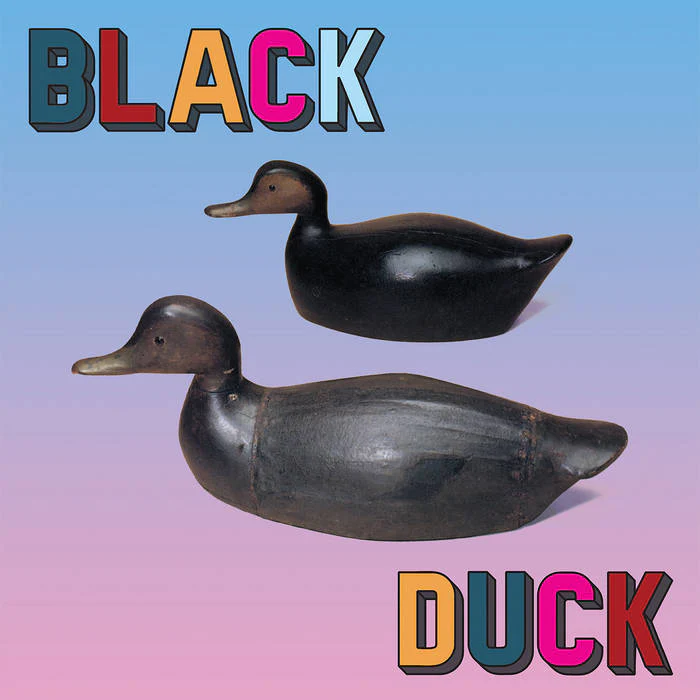
BLACK DUCK - s/t CD
Black Duck brings together three pillars of the Chicago music community: guitarist/bassist Douglas McCombs, guitarist Bill MacKay and drummer Charles Rumback. MacKay began releasing records in the early 2000s. He has released several acclaimed solo albums with Drag City as well as a duo album each with Nathan Bowles (Banjo, Black Twig Pickers), and Katinka Kleijn (Cello, Chicago Symphony Orchestra (CSO)), and two beloved records with Ryley Walker. An excellent guitar player, MacKay has performed with McCombs many times in various groups including guest stints in Eleventh Dream Day. Charles Rumback burst onto the fertile Chicago improvised music scene in the early 2000’s. His fluid technique and expressive playing garnered him much attention. Rumback and MacKay met at Roosevelt University and hit it off immediately, performing and recording together in various ensembles. Rumback too caught the attention of Ryley Walker, culminating in a series of duo albums and has also recorded with the Chicago pianist and legend Jim Baker, releasing several albums that featured Ron Miles, Greg Ward and James Singleton. Douglas McCombs is a founding member of Tortoise, Pullman, Brokeback as well as the long standing bassist for Eleventh Dream Day, an artist whose contribution to the music world can not be overstated. In the short time the trio have played together, they have performed at Big Ears Festival and alongside acts like Yo La Tengo. The trio’s self-titled debut album Black Duck harnesses each player’s capacity for poignant songwriting and improvisational exploration in pieces as far-reaching as they are arresting.
Black Duck is a gallery of sonic tapestries, unbound by any genre constraints while also utilizing genre touchstones. Challenging what a trio of two guitarists and a drummer can do, pieces move from breezy shuffles to stormy blues rumbles to gorgeous textural drones. Playing entirely improvised live sets for years helped develop the trio’s acute senses for one another, knowing precisely how to listen to the others and bolster whatever direction they move in. Steeped in each other’s voices, Black Duck entered the studio with engineer/producer John Hughes III with only three tunes written prior, one by each member, and the remaining pieces took shape much as their live performances, improvised on themes or simple motifs.
McCombs’ “Of the Lit Backyards” is a meditation on the adaptability of human beings, turning the glow of newly reconfigured outdoor spaces, safer to gather in during lockdowns, into swaying western americana. MacKay’s more urgent “Delivery” carves jagged melodies through a rolling bedrock as waves of distant chords pull the ensemble deeper into the unknown. The resolute thud of Rumback’s “The Trees Are Dancing” makes use of space as it gradually grows more dense and colorful. The improvised pieces bring an equal amount of subtle touches and delightful surprises as their more composed counterparts. “Lemon Treasure” builds from an anxious beginning into an ecstatic swirl and “Second Guess” tapping into freeform revelations akin to labelmates Jim White & Marisa Anderson’s collaborative work. The maximalist “Thunder Fade That Earth Smells” whips up a tempest of percussive showers and washes of fuzz where the spare “Light’s New Measure” exhibits some of the album’s most delicate and subtly powerful movements.
Black Duck captures a band already deeply in tune with one another. McCombs, Rumback, and MacKay each have distinct musical voices that are instantly recognizable, yet blend seamlessly with one another. Their time performing together, playing to the moment and reading each other and the spaces they’re in, formed a fluency between the trio which allows them to follow each other down winding paths and short tangents alike. Black Duck’s debut is a testament to that fluency, an expedition led by three veterans into alluring worlds bathed in myriad splendors.
Black Duck is a gallery of sonic tapestries, unbound by any genre constraints while also utilizing genre touchstones. Challenging what a trio of two guitarists and a drummer can do, pieces move from breezy shuffles to stormy blues rumbles to gorgeous textural drones. Playing entirely improvised live sets for years helped develop the trio’s acute senses for one another, knowing precisely how to listen to the others and bolster whatever direction they move in. Steeped in each other’s voices, Black Duck entered the studio with engineer/producer John Hughes III with only three tunes written prior, one by each member, and the remaining pieces took shape much as their live performances, improvised on themes or simple motifs.
McCombs’ “Of the Lit Backyards” is a meditation on the adaptability of human beings, turning the glow of newly reconfigured outdoor spaces, safer to gather in during lockdowns, into swaying western americana. MacKay’s more urgent “Delivery” carves jagged melodies through a rolling bedrock as waves of distant chords pull the ensemble deeper into the unknown. The resolute thud of Rumback’s “The Trees Are Dancing” makes use of space as it gradually grows more dense and colorful. The improvised pieces bring an equal amount of subtle touches and delightful surprises as their more composed counterparts. “Lemon Treasure” builds from an anxious beginning into an ecstatic swirl and “Second Guess” tapping into freeform revelations akin to labelmates Jim White & Marisa Anderson’s collaborative work. The maximalist “Thunder Fade That Earth Smells” whips up a tempest of percussive showers and washes of fuzz where the spare “Light’s New Measure” exhibits some of the album’s most delicate and subtly powerful movements.
Black Duck captures a band already deeply in tune with one another. McCombs, Rumback, and MacKay each have distinct musical voices that are instantly recognizable, yet blend seamlessly with one another. Their time performing together, playing to the moment and reading each other and the spaces they’re in, formed a fluency between the trio which allows them to follow each other down winding paths and short tangents alike. Black Duck’s debut is a testament to that fluency, an expedition led by three veterans into alluring worlds bathed in myriad splendors.
Black Duck brings together three pillars of the Chicago music community: guitarist/bassist Douglas McCombs, guitarist Bill MacKay and drummer Charles Rumback. MacKay began releasing records in the early 2000s. He has released several acclaimed solo albums with Drag City as well as a duo album each with Nathan Bowles (Banjo, Black Twig Pickers), and Katinka Kleijn (Cello, Chicago Symphony Orchestra (CSO)), and two beloved records with Ryley Walker. An excellent guitar player, MacKay has performed with McCombs many times in various groups including guest stints in Eleventh Dream Day. Charles Rumback burst onto the fertile Chicago improvised music scene in the early 2000’s. His fluid technique and expressive playing garnered him much attention. Rumback and MacKay met at Roosevelt University and hit it off immediately, performing and recording together in various ensembles. Rumback too caught the attention of Ryley Walker, culminating in a series of duo albums and has also recorded with the Chicago pianist and legend Jim Baker, releasing several albums that featured Ron Miles, Greg Ward and James Singleton. Douglas McCombs is a founding member of Tortoise, Pullman, Brokeback as well as the long standing bassist for Eleventh Dream Day, an artist whose contribution to the music world can not be overstated. In the short time the trio have played together, they have performed at Big Ears Festival and alongside acts like Yo La Tengo. The trio’s self-titled debut album Black Duck harnesses each player’s capacity for poignant songwriting and improvisational exploration in pieces as far-reaching as they are arresting.
Black Duck is a gallery of sonic tapestries, unbound by any genre constraints while also utilizing genre touchstones. Challenging what a trio of two guitarists and a drummer can do, pieces move from breezy shuffles to stormy blues rumbles to gorgeous textural drones. Playing entirely improvised live sets for years helped develop the trio’s acute senses for one another, knowing precisely how to listen to the others and bolster whatever direction they move in. Steeped in each other’s voices, Black Duck entered the studio with engineer/producer John Hughes III with only three tunes written prior, one by each member, and the remaining pieces took shape much as their live performances, improvised on themes or simple motifs.
McCombs’ “Of the Lit Backyards” is a meditation on the adaptability of human beings, turning the glow of newly reconfigured outdoor spaces, safer to gather in during lockdowns, into swaying western americana. MacKay’s more urgent “Delivery” carves jagged melodies through a rolling bedrock as waves of distant chords pull the ensemble deeper into the unknown. The resolute thud of Rumback’s “The Trees Are Dancing” makes use of space as it gradually grows more dense and colorful. The improvised pieces bring an equal amount of subtle touches and delightful surprises as their more composed counterparts. “Lemon Treasure” builds from an anxious beginning into an ecstatic swirl and “Second Guess” tapping into freeform revelations akin to labelmates Jim White & Marisa Anderson’s collaborative work. The maximalist “Thunder Fade That Earth Smells” whips up a tempest of percussive showers and washes of fuzz where the spare “Light’s New Measure” exhibits some of the album’s most delicate and subtly powerful movements.
Black Duck captures a band already deeply in tune with one another. McCombs, Rumback, and MacKay each have distinct musical voices that are instantly recognizable, yet blend seamlessly with one another. Their time performing together, playing to the moment and reading each other and the spaces they’re in, formed a fluency between the trio which allows them to follow each other down winding paths and short tangents alike. Black Duck’s debut is a testament to that fluency, an expedition led by three veterans into alluring worlds bathed in myriad splendors.
Black Duck is a gallery of sonic tapestries, unbound by any genre constraints while also utilizing genre touchstones. Challenging what a trio of two guitarists and a drummer can do, pieces move from breezy shuffles to stormy blues rumbles to gorgeous textural drones. Playing entirely improvised live sets for years helped develop the trio’s acute senses for one another, knowing precisely how to listen to the others and bolster whatever direction they move in. Steeped in each other’s voices, Black Duck entered the studio with engineer/producer John Hughes III with only three tunes written prior, one by each member, and the remaining pieces took shape much as their live performances, improvised on themes or simple motifs.
McCombs’ “Of the Lit Backyards” is a meditation on the adaptability of human beings, turning the glow of newly reconfigured outdoor spaces, safer to gather in during lockdowns, into swaying western americana. MacKay’s more urgent “Delivery” carves jagged melodies through a rolling bedrock as waves of distant chords pull the ensemble deeper into the unknown. The resolute thud of Rumback’s “The Trees Are Dancing” makes use of space as it gradually grows more dense and colorful. The improvised pieces bring an equal amount of subtle touches and delightful surprises as their more composed counterparts. “Lemon Treasure” builds from an anxious beginning into an ecstatic swirl and “Second Guess” tapping into freeform revelations akin to labelmates Jim White & Marisa Anderson’s collaborative work. The maximalist “Thunder Fade That Earth Smells” whips up a tempest of percussive showers and washes of fuzz where the spare “Light’s New Measure” exhibits some of the album’s most delicate and subtly powerful movements.
Black Duck captures a band already deeply in tune with one another. McCombs, Rumback, and MacKay each have distinct musical voices that are instantly recognizable, yet blend seamlessly with one another. Their time performing together, playing to the moment and reading each other and the spaces they’re in, formed a fluency between the trio which allows them to follow each other down winding paths and short tangents alike. Black Duck’s debut is a testament to that fluency, an expedition led by three veterans into alluring worlds bathed in myriad splendors.
$130.24
Original: $434.12
-70%BLACK DUCK - s/t CD—
$434.12
$130.24Description
Black Duck brings together three pillars of the Chicago music community: guitarist/bassist Douglas McCombs, guitarist Bill MacKay and drummer Charles Rumback. MacKay began releasing records in the early 2000s. He has released several acclaimed solo albums with Drag City as well as a duo album each with Nathan Bowles (Banjo, Black Twig Pickers), and Katinka Kleijn (Cello, Chicago Symphony Orchestra (CSO)), and two beloved records with Ryley Walker. An excellent guitar player, MacKay has performed with McCombs many times in various groups including guest stints in Eleventh Dream Day. Charles Rumback burst onto the fertile Chicago improvised music scene in the early 2000’s. His fluid technique and expressive playing garnered him much attention. Rumback and MacKay met at Roosevelt University and hit it off immediately, performing and recording together in various ensembles. Rumback too caught the attention of Ryley Walker, culminating in a series of duo albums and has also recorded with the Chicago pianist and legend Jim Baker, releasing several albums that featured Ron Miles, Greg Ward and James Singleton. Douglas McCombs is a founding member of Tortoise, Pullman, Brokeback as well as the long standing bassist for Eleventh Dream Day, an artist whose contribution to the music world can not be overstated. In the short time the trio have played together, they have performed at Big Ears Festival and alongside acts like Yo La Tengo. The trio’s self-titled debut album Black Duck harnesses each player’s capacity for poignant songwriting and improvisational exploration in pieces as far-reaching as they are arresting.
Black Duck is a gallery of sonic tapestries, unbound by any genre constraints while also utilizing genre touchstones. Challenging what a trio of two guitarists and a drummer can do, pieces move from breezy shuffles to stormy blues rumbles to gorgeous textural drones. Playing entirely improvised live sets for years helped develop the trio’s acute senses for one another, knowing precisely how to listen to the others and bolster whatever direction they move in. Steeped in each other’s voices, Black Duck entered the studio with engineer/producer John Hughes III with only three tunes written prior, one by each member, and the remaining pieces took shape much as their live performances, improvised on themes or simple motifs.
McCombs’ “Of the Lit Backyards” is a meditation on the adaptability of human beings, turning the glow of newly reconfigured outdoor spaces, safer to gather in during lockdowns, into swaying western americana. MacKay’s more urgent “Delivery” carves jagged melodies through a rolling bedrock as waves of distant chords pull the ensemble deeper into the unknown. The resolute thud of Rumback’s “The Trees Are Dancing” makes use of space as it gradually grows more dense and colorful. The improvised pieces bring an equal amount of subtle touches and delightful surprises as their more composed counterparts. “Lemon Treasure” builds from an anxious beginning into an ecstatic swirl and “Second Guess” tapping into freeform revelations akin to labelmates Jim White & Marisa Anderson’s collaborative work. The maximalist “Thunder Fade That Earth Smells” whips up a tempest of percussive showers and washes of fuzz where the spare “Light’s New Measure” exhibits some of the album’s most delicate and subtly powerful movements.
Black Duck captures a band already deeply in tune with one another. McCombs, Rumback, and MacKay each have distinct musical voices that are instantly recognizable, yet blend seamlessly with one another. Their time performing together, playing to the moment and reading each other and the spaces they’re in, formed a fluency between the trio which allows them to follow each other down winding paths and short tangents alike. Black Duck’s debut is a testament to that fluency, an expedition led by three veterans into alluring worlds bathed in myriad splendors.
Black Duck is a gallery of sonic tapestries, unbound by any genre constraints while also utilizing genre touchstones. Challenging what a trio of two guitarists and a drummer can do, pieces move from breezy shuffles to stormy blues rumbles to gorgeous textural drones. Playing entirely improvised live sets for years helped develop the trio’s acute senses for one another, knowing precisely how to listen to the others and bolster whatever direction they move in. Steeped in each other’s voices, Black Duck entered the studio with engineer/producer John Hughes III with only three tunes written prior, one by each member, and the remaining pieces took shape much as their live performances, improvised on themes or simple motifs.
McCombs’ “Of the Lit Backyards” is a meditation on the adaptability of human beings, turning the glow of newly reconfigured outdoor spaces, safer to gather in during lockdowns, into swaying western americana. MacKay’s more urgent “Delivery” carves jagged melodies through a rolling bedrock as waves of distant chords pull the ensemble deeper into the unknown. The resolute thud of Rumback’s “The Trees Are Dancing” makes use of space as it gradually grows more dense and colorful. The improvised pieces bring an equal amount of subtle touches and delightful surprises as their more composed counterparts. “Lemon Treasure” builds from an anxious beginning into an ecstatic swirl and “Second Guess” tapping into freeform revelations akin to labelmates Jim White & Marisa Anderson’s collaborative work. The maximalist “Thunder Fade That Earth Smells” whips up a tempest of percussive showers and washes of fuzz where the spare “Light’s New Measure” exhibits some of the album’s most delicate and subtly powerful movements.
Black Duck captures a band already deeply in tune with one another. McCombs, Rumback, and MacKay each have distinct musical voices that are instantly recognizable, yet blend seamlessly with one another. Their time performing together, playing to the moment and reading each other and the spaces they’re in, formed a fluency between the trio which allows them to follow each other down winding paths and short tangents alike. Black Duck’s debut is a testament to that fluency, an expedition led by three veterans into alluring worlds bathed in myriad splendors.