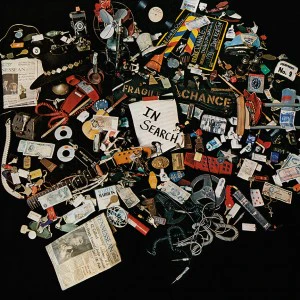
CHANCE - in search LP
The popular American perception of Nashville has changed radically since 1966, when Charles Portis lovingly lampooned the city’s ambitious, strenuously earnest musicians laboring out on the road and in the honky-tonks night after lonesome night, “singing their songs, some trash, some gold, about hearts and wrecks and teardrops.” What hasn’t changed is Nashville’s predilection for the fertile fringes. By fringe, we don’t mean the variety found on Western shirts, skirts, and Nudie suits, but rather the cultural fringe, the underground realms of outsiders and weirdos prowling their own private, dimly lit lairs on the stoned periphery of the ubiquitous Nashville machine, in the company of likeminded eccentrics and heroes.
As ringleader, maestro, and indomitable troubadour of Nashville’s most private, elusive, and exclusive far-out scene—the Dead End—visionary artist and Nashville lifer Chance Martin (aka Alamo Jones, the Voice in Black aka the Stoned Ranger) could have stepped from the pages of a Portis novel, Barry Hannah story, or Coen Bros. script. After working for and touring with his friend and mentor Johnny Cash as cue card man, stage manager, and lighting designer for eight years, in 1977 Chance began a new life. By the time he was thirty-one, he had already worked stagehands union gigs for all the greats, hung with them and partied with them backstage, and realized that it was now or never—time to turn off all the outside influences, hunker down, and make it new, or else. So he started writing songs on Johnny Cash’s D35 Martin, a gift from the master.
The popular American perception of Nashville has changed radically since 1966, when Charles Portis lovingly lampooned the city’s ambitious, strenuously earnest musicians laboring out on the road and in the honky-tonks night after lonesome night, “singing their songs, some trash, some gold, about hearts and wrecks and teardrops.” What hasn’t changed is Nashville’s predilection for the fertile fringes. By fringe, we don’t mean the variety found on Western shirts, skirts, and Nudie suits, but rather the cultural fringe, the underground realms of outsiders and weirdos prowling their own private, dimly lit lairs on the stoned periphery of the ubiquitous Nashville machine, in the company of likeminded eccentrics and heroes.
As ringleader, maestro, and indomitable troubadour of Nashville’s most private, elusive, and exclusive far-out scene—the Dead End—visionary artist and Nashville lifer Chance Martin (aka Alamo Jones, the Voice in Black aka the Stoned Ranger) could have stepped from the pages of a Portis novel, Barry Hannah story, or Coen Bros. script. After working for and touring with his friend and mentor Johnny Cash as cue card man, stage manager, and lighting designer for eight years, in 1977 Chance began a new life. By the time he was thirty-one, he had already worked stagehands union gigs for all the greats, hung with them and partied with them backstage, and realized that it was now or never—time to turn off all the outside influences, hunker down, and make it new, or else. So he started writing songs on Johnny Cash’s D35 Martin, a gift from the master.
Original: $24.31
-70%$24.31
$7.29Description
The popular American perception of Nashville has changed radically since 1966, when Charles Portis lovingly lampooned the city’s ambitious, strenuously earnest musicians laboring out on the road and in the honky-tonks night after lonesome night, “singing their songs, some trash, some gold, about hearts and wrecks and teardrops.” What hasn’t changed is Nashville’s predilection for the fertile fringes. By fringe, we don’t mean the variety found on Western shirts, skirts, and Nudie suits, but rather the cultural fringe, the underground realms of outsiders and weirdos prowling their own private, dimly lit lairs on the stoned periphery of the ubiquitous Nashville machine, in the company of likeminded eccentrics and heroes.
As ringleader, maestro, and indomitable troubadour of Nashville’s most private, elusive, and exclusive far-out scene—the Dead End—visionary artist and Nashville lifer Chance Martin (aka Alamo Jones, the Voice in Black aka the Stoned Ranger) could have stepped from the pages of a Portis novel, Barry Hannah story, or Coen Bros. script. After working for and touring with his friend and mentor Johnny Cash as cue card man, stage manager, and lighting designer for eight years, in 1977 Chance began a new life. By the time he was thirty-one, he had already worked stagehands union gigs for all the greats, hung with them and partied with them backstage, and realized that it was now or never—time to turn off all the outside influences, hunker down, and make it new, or else. So he started writing songs on Johnny Cash’s D35 Martin, a gift from the master.