🚚 Kostenloser weltweiter Versand für alle Bestellungen!Jetzt einkaufen
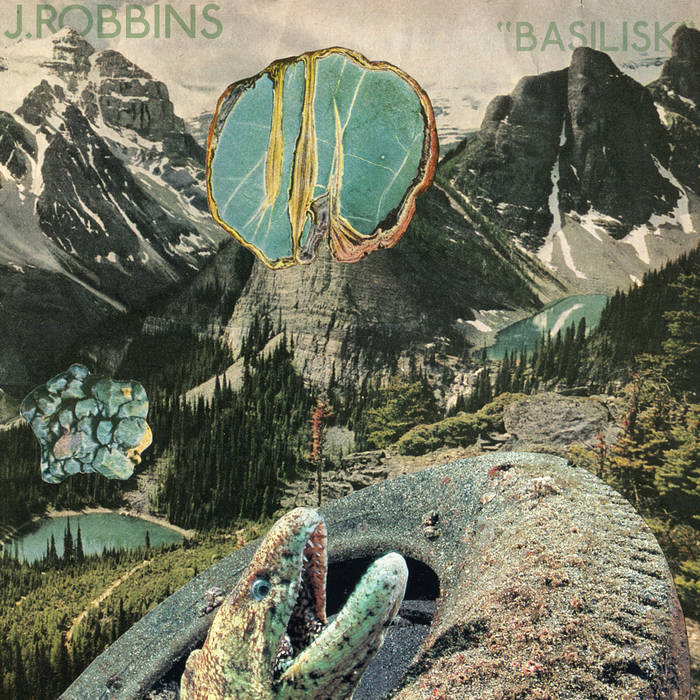
J. ROBBINS - Basilisk LP
J. Robbins has been a crucial figure in the D.C. post-hardcore scene since the 1989 release of his band Jawbox’s aggressively catchy debut single, “Tools & Chrome.” After playing their first show with Fugazi and releasing a pair of albums on Dischord Records, Jawbox signed a major label deal with Atlantic and toured with Stone Temple Pilots at the peak of their fame. The group dissolved in the late ’90s, but Robbins’s prolific music-making has continued with projects like Burning Airlines, Channels, and Office of Future Plans; he’s also produced music for hundreds of other artists. Five years after the release of his first solo record, Un-Becoming, Robbins brings things full circle with Basilisk, one of the most accessible entries in his dense discography.
Basilisk is immediately set apart by the introduction of electronic sounds, heard in the trippy, textural interlude “Sonder” or the froggy ribbits filtering through “Gasoline Rainbows.” The dark arpeggios on opener “Automaticity” rise in intensity until Robbins resembles Travis Morrison shouting over a CB radio, decrying the feeling of being, “so lifelike when you take your place to say what you’re expected to say.” “Dead Eyed God” takes an entirely different approach, gliding through glitchy beats, shimmery synths, and thunderous drums. When Robbins says he’s influenced by Peter Gabriel, the proof is in the pudding.
The album also includes frequent collaborators such as Robbins’s Office of Future Plans bandmates, alongside newer ones like Naked Raygun guitarist John Haggerty, who lays down a scorching solo on “Exquisite Corpse.” In the moments when Basilisk’s rockier tunes blur together, he tosses out curveballs like the burbling slide guitars of “Not the End” or swooning shoegaze riffs of “Open Mind”—a sample platter of the many sounds Robbins has explored over the past 35 years, united by his assured vocals.
“Last War” and “Dead Eyed God” ground the album in the present day as Robbins looks back to January 6th as a flashpoint for neo-fascism. Yet it’s “Deception Island” that could have the strongest appeal for fans of Robbins’s past work, picking up the pace with racing 32nd note hi-hats as he sings about recurring childhood dreams. Fans of Jawbox will love it, but Robbins has never been content to stay in one mode for long.
Basilisk is immediately set apart by the introduction of electronic sounds, heard in the trippy, textural interlude “Sonder” or the froggy ribbits filtering through “Gasoline Rainbows.” The dark arpeggios on opener “Automaticity” rise in intensity until Robbins resembles Travis Morrison shouting over a CB radio, decrying the feeling of being, “so lifelike when you take your place to say what you’re expected to say.” “Dead Eyed God” takes an entirely different approach, gliding through glitchy beats, shimmery synths, and thunderous drums. When Robbins says he’s influenced by Peter Gabriel, the proof is in the pudding.
The album also includes frequent collaborators such as Robbins’s Office of Future Plans bandmates, alongside newer ones like Naked Raygun guitarist John Haggerty, who lays down a scorching solo on “Exquisite Corpse.” In the moments when Basilisk’s rockier tunes blur together, he tosses out curveballs like the burbling slide guitars of “Not the End” or swooning shoegaze riffs of “Open Mind”—a sample platter of the many sounds Robbins has explored over the past 35 years, united by his assured vocals.
“Last War” and “Dead Eyed God” ground the album in the present day as Robbins looks back to January 6th as a flashpoint for neo-fascism. Yet it’s “Deception Island” that could have the strongest appeal for fans of Robbins’s past work, picking up the pace with racing 32nd note hi-hats as he sings about recurring childhood dreams. Fans of Jawbox will love it, but Robbins has never been content to stay in one mode for long.
J. Robbins has been a crucial figure in the D.C. post-hardcore scene since the 1989 release of his band Jawbox’s aggressively catchy debut single, “Tools & Chrome.” After playing their first show with Fugazi and releasing a pair of albums on Dischord Records, Jawbox signed a major label deal with Atlantic and toured with Stone Temple Pilots at the peak of their fame. The group dissolved in the late ’90s, but Robbins’s prolific music-making has continued with projects like Burning Airlines, Channels, and Office of Future Plans; he’s also produced music for hundreds of other artists. Five years after the release of his first solo record, Un-Becoming, Robbins brings things full circle with Basilisk, one of the most accessible entries in his dense discography.
Basilisk is immediately set apart by the introduction of electronic sounds, heard in the trippy, textural interlude “Sonder” or the froggy ribbits filtering through “Gasoline Rainbows.” The dark arpeggios on opener “Automaticity” rise in intensity until Robbins resembles Travis Morrison shouting over a CB radio, decrying the feeling of being, “so lifelike when you take your place to say what you’re expected to say.” “Dead Eyed God” takes an entirely different approach, gliding through glitchy beats, shimmery synths, and thunderous drums. When Robbins says he’s influenced by Peter Gabriel, the proof is in the pudding.
The album also includes frequent collaborators such as Robbins’s Office of Future Plans bandmates, alongside newer ones like Naked Raygun guitarist John Haggerty, who lays down a scorching solo on “Exquisite Corpse.” In the moments when Basilisk’s rockier tunes blur together, he tosses out curveballs like the burbling slide guitars of “Not the End” or swooning shoegaze riffs of “Open Mind”—a sample platter of the many sounds Robbins has explored over the past 35 years, united by his assured vocals.
“Last War” and “Dead Eyed God” ground the album in the present day as Robbins looks back to January 6th as a flashpoint for neo-fascism. Yet it’s “Deception Island” that could have the strongest appeal for fans of Robbins’s past work, picking up the pace with racing 32nd note hi-hats as he sings about recurring childhood dreams. Fans of Jawbox will love it, but Robbins has never been content to stay in one mode for long.
Basilisk is immediately set apart by the introduction of electronic sounds, heard in the trippy, textural interlude “Sonder” or the froggy ribbits filtering through “Gasoline Rainbows.” The dark arpeggios on opener “Automaticity” rise in intensity until Robbins resembles Travis Morrison shouting over a CB radio, decrying the feeling of being, “so lifelike when you take your place to say what you’re expected to say.” “Dead Eyed God” takes an entirely different approach, gliding through glitchy beats, shimmery synths, and thunderous drums. When Robbins says he’s influenced by Peter Gabriel, the proof is in the pudding.
The album also includes frequent collaborators such as Robbins’s Office of Future Plans bandmates, alongside newer ones like Naked Raygun guitarist John Haggerty, who lays down a scorching solo on “Exquisite Corpse.” In the moments when Basilisk’s rockier tunes blur together, he tosses out curveballs like the burbling slide guitars of “Not the End” or swooning shoegaze riffs of “Open Mind”—a sample platter of the many sounds Robbins has explored over the past 35 years, united by his assured vocals.
“Last War” and “Dead Eyed God” ground the album in the present day as Robbins looks back to January 6th as a flashpoint for neo-fascism. Yet it’s “Deception Island” that could have the strongest appeal for fans of Robbins’s past work, picking up the pace with racing 32nd note hi-hats as he sings about recurring childhood dreams. Fans of Jawbox will love it, but Robbins has never been content to stay in one mode for long.
$203.75
J. ROBBINS - Basilisk LP—
$203.75
Description
J. Robbins has been a crucial figure in the D.C. post-hardcore scene since the 1989 release of his band Jawbox’s aggressively catchy debut single, “Tools & Chrome.” After playing their first show with Fugazi and releasing a pair of albums on Dischord Records, Jawbox signed a major label deal with Atlantic and toured with Stone Temple Pilots at the peak of their fame. The group dissolved in the late ’90s, but Robbins’s prolific music-making has continued with projects like Burning Airlines, Channels, and Office of Future Plans; he’s also produced music for hundreds of other artists. Five years after the release of his first solo record, Un-Becoming, Robbins brings things full circle with Basilisk, one of the most accessible entries in his dense discography.
Basilisk is immediately set apart by the introduction of electronic sounds, heard in the trippy, textural interlude “Sonder” or the froggy ribbits filtering through “Gasoline Rainbows.” The dark arpeggios on opener “Automaticity” rise in intensity until Robbins resembles Travis Morrison shouting over a CB radio, decrying the feeling of being, “so lifelike when you take your place to say what you’re expected to say.” “Dead Eyed God” takes an entirely different approach, gliding through glitchy beats, shimmery synths, and thunderous drums. When Robbins says he’s influenced by Peter Gabriel, the proof is in the pudding.
The album also includes frequent collaborators such as Robbins’s Office of Future Plans bandmates, alongside newer ones like Naked Raygun guitarist John Haggerty, who lays down a scorching solo on “Exquisite Corpse.” In the moments when Basilisk’s rockier tunes blur together, he tosses out curveballs like the burbling slide guitars of “Not the End” or swooning shoegaze riffs of “Open Mind”—a sample platter of the many sounds Robbins has explored over the past 35 years, united by his assured vocals.
“Last War” and “Dead Eyed God” ground the album in the present day as Robbins looks back to January 6th as a flashpoint for neo-fascism. Yet it’s “Deception Island” that could have the strongest appeal for fans of Robbins’s past work, picking up the pace with racing 32nd note hi-hats as he sings about recurring childhood dreams. Fans of Jawbox will love it, but Robbins has never been content to stay in one mode for long.
Basilisk is immediately set apart by the introduction of electronic sounds, heard in the trippy, textural interlude “Sonder” or the froggy ribbits filtering through “Gasoline Rainbows.” The dark arpeggios on opener “Automaticity” rise in intensity until Robbins resembles Travis Morrison shouting over a CB radio, decrying the feeling of being, “so lifelike when you take your place to say what you’re expected to say.” “Dead Eyed God” takes an entirely different approach, gliding through glitchy beats, shimmery synths, and thunderous drums. When Robbins says he’s influenced by Peter Gabriel, the proof is in the pudding.
The album also includes frequent collaborators such as Robbins’s Office of Future Plans bandmates, alongside newer ones like Naked Raygun guitarist John Haggerty, who lays down a scorching solo on “Exquisite Corpse.” In the moments when Basilisk’s rockier tunes blur together, he tosses out curveballs like the burbling slide guitars of “Not the End” or swooning shoegaze riffs of “Open Mind”—a sample platter of the many sounds Robbins has explored over the past 35 years, united by his assured vocals.
“Last War” and “Dead Eyed God” ground the album in the present day as Robbins looks back to January 6th as a flashpoint for neo-fascism. Yet it’s “Deception Island” that could have the strongest appeal for fans of Robbins’s past work, picking up the pace with racing 32nd note hi-hats as he sings about recurring childhood dreams. Fans of Jawbox will love it, but Robbins has never been content to stay in one mode for long.