🚚 Kostenloser weltweiter Versand für alle Bestellungen!Jetzt einkaufen
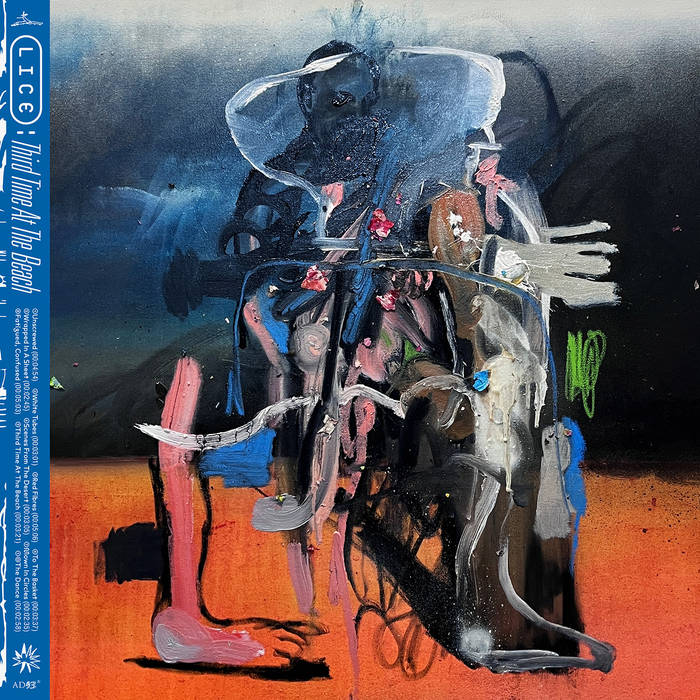
LICE - Third Time At The Beach LP
Formed in Bristol, 4-piece LICE have become one of UK experimental rock’s most inventive and ambitious outliers. Their second album Third Time At The Beach – a three-part epic exploring our struggle to better understand the world around us via AD 93. Darting between minimalism, rock, techno and more, it sends us hurtling us through time and space: featuring a cast of astronauts, cavemen and dinosaurs.
This follows LICE’s internationally acclaimed debut album WASTELAND: What Ails Our People Is Clear (2021). Praised as “exciting, alive, packed with musical ideas” by Financial Times and “a welcome lease of life for British avant-rock that plays with expectation at every turn” by CRACK, it also gained radio support across BBC 6Music, BBC Radio 1 and KEXP. The album led LICE to perform at major festivals including Reading & Leeds, Green Man and End Of The Road, embark on an extensive EU tour supporting Sleaford Mods, and tour across the UK & EU.
Third Time At The Beach’s concept is expressed through three movements. The first (‘Unscrewed’, ‘White Tubes’, ‘Red Fibres’) presents the child being introduced to the world, hammered into shape through prevailing culture, and realising they have reached adulthood with a blinkered understanding of the world. The second (‘To The Basket’, ‘Wrapped In A Sheet’, ‘Scenes From The Desert’, ‘Mown In Circles’) is a disorientating, alien sequence: re-evaluating fundamental concepts including money, time, nationhood and language. In the third (‘Fatigued, Confused’, ‘Third Time At The Beach’, ‘The Dance’), the individual embraces these new ideas – granting them a changed understanding of the world, and more agency in the path they take through it.
Everything is always changing in Third Time At The Beach. The album shifts from lush piano balladry to crushing industrial, and from swampy avant-garde compositions to triumphant rock freakouts. Employing vocal manipulation and field recordings, as well as cutting together studio recordings and home demos, the band produces a spatially elastic, collage-like effect. The album, like the ideas being reached within it, presents a work-in-progress.
Lyrically, the record employs a scattershot style to present the experience of learning (or ‘unlearning’). The listener visits ancient civilisations, the Industrial Revolution, outer space and the land of the dinosaurs: encountering mediaeval farmers, silver miners, cavemen, Napoleon and Satan.
Speaking on the record, the band say: “This album’s about trying to understand the world and everything in it: history, science and the way we explain it all to each other. It’s a celebration of feeling confused or intimidated by the processes that shape our lives.”
This follows LICE’s internationally acclaimed debut album WASTELAND: What Ails Our People Is Clear (2021). Praised as “exciting, alive, packed with musical ideas” by Financial Times and “a welcome lease of life for British avant-rock that plays with expectation at every turn” by CRACK, it also gained radio support across BBC 6Music, BBC Radio 1 and KEXP. The album led LICE to perform at major festivals including Reading & Leeds, Green Man and End Of The Road, embark on an extensive EU tour supporting Sleaford Mods, and tour across the UK & EU.
Third Time At The Beach’s concept is expressed through three movements. The first (‘Unscrewed’, ‘White Tubes’, ‘Red Fibres’) presents the child being introduced to the world, hammered into shape through prevailing culture, and realising they have reached adulthood with a blinkered understanding of the world. The second (‘To The Basket’, ‘Wrapped In A Sheet’, ‘Scenes From The Desert’, ‘Mown In Circles’) is a disorientating, alien sequence: re-evaluating fundamental concepts including money, time, nationhood and language. In the third (‘Fatigued, Confused’, ‘Third Time At The Beach’, ‘The Dance’), the individual embraces these new ideas – granting them a changed understanding of the world, and more agency in the path they take through it.
Everything is always changing in Third Time At The Beach. The album shifts from lush piano balladry to crushing industrial, and from swampy avant-garde compositions to triumphant rock freakouts. Employing vocal manipulation and field recordings, as well as cutting together studio recordings and home demos, the band produces a spatially elastic, collage-like effect. The album, like the ideas being reached within it, presents a work-in-progress.
Lyrically, the record employs a scattershot style to present the experience of learning (or ‘unlearning’). The listener visits ancient civilisations, the Industrial Revolution, outer space and the land of the dinosaurs: encountering mediaeval farmers, silver miners, cavemen, Napoleon and Satan.
Speaking on the record, the band say: “This album’s about trying to understand the world and everything in it: history, science and the way we explain it all to each other. It’s a celebration of feeling confused or intimidated by the processes that shape our lives.”
Formed in Bristol, 4-piece LICE have become one of UK experimental rock’s most inventive and ambitious outliers. Their second album Third Time At The Beach – a three-part epic exploring our struggle to better understand the world around us via AD 93. Darting between minimalism, rock, techno and more, it sends us hurtling us through time and space: featuring a cast of astronauts, cavemen and dinosaurs.
This follows LICE’s internationally acclaimed debut album WASTELAND: What Ails Our People Is Clear (2021). Praised as “exciting, alive, packed with musical ideas” by Financial Times and “a welcome lease of life for British avant-rock that plays with expectation at every turn” by CRACK, it also gained radio support across BBC 6Music, BBC Radio 1 and KEXP. The album led LICE to perform at major festivals including Reading & Leeds, Green Man and End Of The Road, embark on an extensive EU tour supporting Sleaford Mods, and tour across the UK & EU.
Third Time At The Beach’s concept is expressed through three movements. The first (‘Unscrewed’, ‘White Tubes’, ‘Red Fibres’) presents the child being introduced to the world, hammered into shape through prevailing culture, and realising they have reached adulthood with a blinkered understanding of the world. The second (‘To The Basket’, ‘Wrapped In A Sheet’, ‘Scenes From The Desert’, ‘Mown In Circles’) is a disorientating, alien sequence: re-evaluating fundamental concepts including money, time, nationhood and language. In the third (‘Fatigued, Confused’, ‘Third Time At The Beach’, ‘The Dance’), the individual embraces these new ideas – granting them a changed understanding of the world, and more agency in the path they take through it.
Everything is always changing in Third Time At The Beach. The album shifts from lush piano balladry to crushing industrial, and from swampy avant-garde compositions to triumphant rock freakouts. Employing vocal manipulation and field recordings, as well as cutting together studio recordings and home demos, the band produces a spatially elastic, collage-like effect. The album, like the ideas being reached within it, presents a work-in-progress.
Lyrically, the record employs a scattershot style to present the experience of learning (or ‘unlearning’). The listener visits ancient civilisations, the Industrial Revolution, outer space and the land of the dinosaurs: encountering mediaeval farmers, silver miners, cavemen, Napoleon and Satan.
Speaking on the record, the band say: “This album’s about trying to understand the world and everything in it: history, science and the way we explain it all to each other. It’s a celebration of feeling confused or intimidated by the processes that shape our lives.”
This follows LICE’s internationally acclaimed debut album WASTELAND: What Ails Our People Is Clear (2021). Praised as “exciting, alive, packed with musical ideas” by Financial Times and “a welcome lease of life for British avant-rock that plays with expectation at every turn” by CRACK, it also gained radio support across BBC 6Music, BBC Radio 1 and KEXP. The album led LICE to perform at major festivals including Reading & Leeds, Green Man and End Of The Road, embark on an extensive EU tour supporting Sleaford Mods, and tour across the UK & EU.
Third Time At The Beach’s concept is expressed through three movements. The first (‘Unscrewed’, ‘White Tubes’, ‘Red Fibres’) presents the child being introduced to the world, hammered into shape through prevailing culture, and realising they have reached adulthood with a blinkered understanding of the world. The second (‘To The Basket’, ‘Wrapped In A Sheet’, ‘Scenes From The Desert’, ‘Mown In Circles’) is a disorientating, alien sequence: re-evaluating fundamental concepts including money, time, nationhood and language. In the third (‘Fatigued, Confused’, ‘Third Time At The Beach’, ‘The Dance’), the individual embraces these new ideas – granting them a changed understanding of the world, and more agency in the path they take through it.
Everything is always changing in Third Time At The Beach. The album shifts from lush piano balladry to crushing industrial, and from swampy avant-garde compositions to triumphant rock freakouts. Employing vocal manipulation and field recordings, as well as cutting together studio recordings and home demos, the band produces a spatially elastic, collage-like effect. The album, like the ideas being reached within it, presents a work-in-progress.
Lyrically, the record employs a scattershot style to present the experience of learning (or ‘unlearning’). The listener visits ancient civilisations, the Industrial Revolution, outer space and the land of the dinosaurs: encountering mediaeval farmers, silver miners, cavemen, Napoleon and Satan.
Speaking on the record, the band say: “This album’s about trying to understand the world and everything in it: history, science and the way we explain it all to each other. It’s a celebration of feeling confused or intimidated by the processes that shape our lives.”
$9.72
Original: $32.41
-70%LICE - Third Time At The Beach LP—
$32.41
$9.72Description
Formed in Bristol, 4-piece LICE have become one of UK experimental rock’s most inventive and ambitious outliers. Their second album Third Time At The Beach – a three-part epic exploring our struggle to better understand the world around us via AD 93. Darting between minimalism, rock, techno and more, it sends us hurtling us through time and space: featuring a cast of astronauts, cavemen and dinosaurs.
This follows LICE’s internationally acclaimed debut album WASTELAND: What Ails Our People Is Clear (2021). Praised as “exciting, alive, packed with musical ideas” by Financial Times and “a welcome lease of life for British avant-rock that plays with expectation at every turn” by CRACK, it also gained radio support across BBC 6Music, BBC Radio 1 and KEXP. The album led LICE to perform at major festivals including Reading & Leeds, Green Man and End Of The Road, embark on an extensive EU tour supporting Sleaford Mods, and tour across the UK & EU.
Third Time At The Beach’s concept is expressed through three movements. The first (‘Unscrewed’, ‘White Tubes’, ‘Red Fibres’) presents the child being introduced to the world, hammered into shape through prevailing culture, and realising they have reached adulthood with a blinkered understanding of the world. The second (‘To The Basket’, ‘Wrapped In A Sheet’, ‘Scenes From The Desert’, ‘Mown In Circles’) is a disorientating, alien sequence: re-evaluating fundamental concepts including money, time, nationhood and language. In the third (‘Fatigued, Confused’, ‘Third Time At The Beach’, ‘The Dance’), the individual embraces these new ideas – granting them a changed understanding of the world, and more agency in the path they take through it.
Everything is always changing in Third Time At The Beach. The album shifts from lush piano balladry to crushing industrial, and from swampy avant-garde compositions to triumphant rock freakouts. Employing vocal manipulation and field recordings, as well as cutting together studio recordings and home demos, the band produces a spatially elastic, collage-like effect. The album, like the ideas being reached within it, presents a work-in-progress.
Lyrically, the record employs a scattershot style to present the experience of learning (or ‘unlearning’). The listener visits ancient civilisations, the Industrial Revolution, outer space and the land of the dinosaurs: encountering mediaeval farmers, silver miners, cavemen, Napoleon and Satan.
Speaking on the record, the band say: “This album’s about trying to understand the world and everything in it: history, science and the way we explain it all to each other. It’s a celebration of feeling confused or intimidated by the processes that shape our lives.”
This follows LICE’s internationally acclaimed debut album WASTELAND: What Ails Our People Is Clear (2021). Praised as “exciting, alive, packed with musical ideas” by Financial Times and “a welcome lease of life for British avant-rock that plays with expectation at every turn” by CRACK, it also gained radio support across BBC 6Music, BBC Radio 1 and KEXP. The album led LICE to perform at major festivals including Reading & Leeds, Green Man and End Of The Road, embark on an extensive EU tour supporting Sleaford Mods, and tour across the UK & EU.
Third Time At The Beach’s concept is expressed through three movements. The first (‘Unscrewed’, ‘White Tubes’, ‘Red Fibres’) presents the child being introduced to the world, hammered into shape through prevailing culture, and realising they have reached adulthood with a blinkered understanding of the world. The second (‘To The Basket’, ‘Wrapped In A Sheet’, ‘Scenes From The Desert’, ‘Mown In Circles’) is a disorientating, alien sequence: re-evaluating fundamental concepts including money, time, nationhood and language. In the third (‘Fatigued, Confused’, ‘Third Time At The Beach’, ‘The Dance’), the individual embraces these new ideas – granting them a changed understanding of the world, and more agency in the path they take through it.
Everything is always changing in Third Time At The Beach. The album shifts from lush piano balladry to crushing industrial, and from swampy avant-garde compositions to triumphant rock freakouts. Employing vocal manipulation and field recordings, as well as cutting together studio recordings and home demos, the band produces a spatially elastic, collage-like effect. The album, like the ideas being reached within it, presents a work-in-progress.
Lyrically, the record employs a scattershot style to present the experience of learning (or ‘unlearning’). The listener visits ancient civilisations, the Industrial Revolution, outer space and the land of the dinosaurs: encountering mediaeval farmers, silver miners, cavemen, Napoleon and Satan.
Speaking on the record, the band say: “This album’s about trying to understand the world and everything in it: history, science and the way we explain it all to each other. It’s a celebration of feeling confused or intimidated by the processes that shape our lives.”