🚚 Kostenloser weltweiter Versand für alle Bestellungen!Jetzt einkaufen
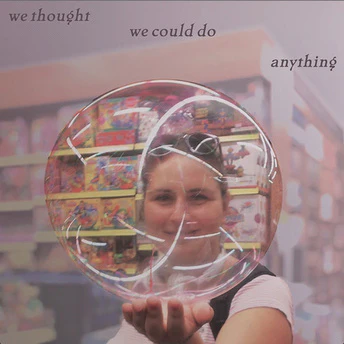
LIPPARD ARKBRO LINDWALL - How do I know if my cat likes me? LP
Hanne Lippard, Ellen Arkbro, and Hampus Lindwall’s How do I know if my cat likes me? is an existential meditation on the empty expanses of our automated everyday—corporatized minimalism tinged with cool formalism, structured by the deft deployment of sonic and lyrical repetition. By untethering sound from meaning through a pleasurably numbing cycle of repetition, the album satirizes the stultifying aesthetics of alienated life—from hold music to online banking—with a prim, deadpan delivery.
Conceived when Lippard and Arkbro were both in residence at La Becque in La Tour-de-Peilz, Switzerland (and recorded in part on the organs of that same town’s Temple Saint-Théodule), How do I know if my cat likes me? is a long-awaited collaboration from the trio they formed with Lindwall. Throughout, Arkbro and Lindwall’s ascetic organ accompaniment provides a tonal landscape that is both intuitive and enigmatic, while Lippard’s recitation ensnares the listener in a tautological customer-service loop where language shifts from pure function to pure aesthetic. How do I know if my cat likes me? opens with an interpretation of Phil Harmonic’s classic 1978 composition “Timing,” originally written for and performed by “Blue” Gene Tyranny. Harmonic, a Cagian who resisted the authoritarian strictures of notation, wrote a piece that invites the performer to make “subtle and thoughtful changes” based on pre-recorded audio cues—“Change now”—designed to capture his idiosyncratic sense of timing. “The Long Goodbye” imagines an unending dialogue between automated acquaintances who try to politely disengage with the same few parting words, perpetually on the verge of separation. Meanwhile, “Modern Spanking” paronomastically free-associates from sterile conveniences to illicit erotics. Drifting from “online banking” to “breathing down your neck banking” and “sexy, but bankrupt, banking,” it sketches a world of perfunctory pleasures whose sadism is more indebted to Jamie Dimon than Marquis de Sade. The album wraps up with a rendition of “At Last I Am Free,” Bernard Edwards and Nile Rodgers’ disco breakup anthem, notably reinterpreted by Robert Wyatt as a world-weary yet triumphant protest song. Amid the monotonous absurdities of How do I know if my cat likes me?, “At Last I Am Free” takes on a haunting irony. With its eternally ambiguous refrain—“I can hardly see in front of me”—the song calls into question the very fact of freedom (perhaps as an antidote to Harmonic’s Cagianism). Existential angst dissolves into hypnagogic detachment.
How do I know if my cat likes me? recalls David Rosenboom and Jacqueline Humbert’s Daytime Viewing (1979–80) (Unseen Worlds, 2013), a highly stylized, puckish stream of soap-operatic scenes and sales channel segments, punctuated by Humbert’s listless narration and Rosenboom and Willie Winant’s drum machines, claves, and maracas. The album also nods to Paul DeMarinis’s Songs Without Throats (Black Truffle, 2019), a compilation of tracks from the 1970s in which all the lyrics are recited by Speak & Spell machines. Constantly poking at the porous membrane between sound and meaning, poetry and song, or playful irreverence and existentialism, How do I know if my cat likes me? is a portal into a fantastical, unforgettable, organic-synthetic world.
Hanne Lippard is an artist who has been using language as the raw material for her work for the last decade, processing it in the form of texts, vocal performances, sound installations, printed objects and sculpture.
Ellen Arkbro is a composer, musician, and sound artist working with precision-tuned intervallic harmony and installation. She focuses on the qualities of harmonic sound that reveal listening as an active process of creative participation, inviting the listener to gradually transform into the sound itself.
Hampus Lindwall is an artist, organist, and composer. Since 2005, he has been the Titular Organist in Saint-Esprit, Paris.
Conceived when Lippard and Arkbro were both in residence at La Becque in La Tour-de-Peilz, Switzerland (and recorded in part on the organs of that same town’s Temple Saint-Théodule), How do I know if my cat likes me? is a long-awaited collaboration from the trio they formed with Lindwall. Throughout, Arkbro and Lindwall’s ascetic organ accompaniment provides a tonal landscape that is both intuitive and enigmatic, while Lippard’s recitation ensnares the listener in a tautological customer-service loop where language shifts from pure function to pure aesthetic. How do I know if my cat likes me? opens with an interpretation of Phil Harmonic’s classic 1978 composition “Timing,” originally written for and performed by “Blue” Gene Tyranny. Harmonic, a Cagian who resisted the authoritarian strictures of notation, wrote a piece that invites the performer to make “subtle and thoughtful changes” based on pre-recorded audio cues—“Change now”—designed to capture his idiosyncratic sense of timing. “The Long Goodbye” imagines an unending dialogue between automated acquaintances who try to politely disengage with the same few parting words, perpetually on the verge of separation. Meanwhile, “Modern Spanking” paronomastically free-associates from sterile conveniences to illicit erotics. Drifting from “online banking” to “breathing down your neck banking” and “sexy, but bankrupt, banking,” it sketches a world of perfunctory pleasures whose sadism is more indebted to Jamie Dimon than Marquis de Sade. The album wraps up with a rendition of “At Last I Am Free,” Bernard Edwards and Nile Rodgers’ disco breakup anthem, notably reinterpreted by Robert Wyatt as a world-weary yet triumphant protest song. Amid the monotonous absurdities of How do I know if my cat likes me?, “At Last I Am Free” takes on a haunting irony. With its eternally ambiguous refrain—“I can hardly see in front of me”—the song calls into question the very fact of freedom (perhaps as an antidote to Harmonic’s Cagianism). Existential angst dissolves into hypnagogic detachment.
How do I know if my cat likes me? recalls David Rosenboom and Jacqueline Humbert’s Daytime Viewing (1979–80) (Unseen Worlds, 2013), a highly stylized, puckish stream of soap-operatic scenes and sales channel segments, punctuated by Humbert’s listless narration and Rosenboom and Willie Winant’s drum machines, claves, and maracas. The album also nods to Paul DeMarinis’s Songs Without Throats (Black Truffle, 2019), a compilation of tracks from the 1970s in which all the lyrics are recited by Speak & Spell machines. Constantly poking at the porous membrane between sound and meaning, poetry and song, or playful irreverence and existentialism, How do I know if my cat likes me? is a portal into a fantastical, unforgettable, organic-synthetic world.
Hanne Lippard is an artist who has been using language as the raw material for her work for the last decade, processing it in the form of texts, vocal performances, sound installations, printed objects and sculpture.
Ellen Arkbro is a composer, musician, and sound artist working with precision-tuned intervallic harmony and installation. She focuses on the qualities of harmonic sound that reveal listening as an active process of creative participation, inviting the listener to gradually transform into the sound itself.
Hampus Lindwall is an artist, organist, and composer. Since 2005, he has been the Titular Organist in Saint-Esprit, Paris.
Hanne Lippard, Ellen Arkbro, and Hampus Lindwall’s How do I know if my cat likes me? is an existential meditation on the empty expanses of our automated everyday—corporatized minimalism tinged with cool formalism, structured by the deft deployment of sonic and lyrical repetition. By untethering sound from meaning through a pleasurably numbing cycle of repetition, the album satirizes the stultifying aesthetics of alienated life—from hold music to online banking—with a prim, deadpan delivery.
Conceived when Lippard and Arkbro were both in residence at La Becque in La Tour-de-Peilz, Switzerland (and recorded in part on the organs of that same town’s Temple Saint-Théodule), How do I know if my cat likes me? is a long-awaited collaboration from the trio they formed with Lindwall. Throughout, Arkbro and Lindwall’s ascetic organ accompaniment provides a tonal landscape that is both intuitive and enigmatic, while Lippard’s recitation ensnares the listener in a tautological customer-service loop where language shifts from pure function to pure aesthetic. How do I know if my cat likes me? opens with an interpretation of Phil Harmonic’s classic 1978 composition “Timing,” originally written for and performed by “Blue” Gene Tyranny. Harmonic, a Cagian who resisted the authoritarian strictures of notation, wrote a piece that invites the performer to make “subtle and thoughtful changes” based on pre-recorded audio cues—“Change now”—designed to capture his idiosyncratic sense of timing. “The Long Goodbye” imagines an unending dialogue between automated acquaintances who try to politely disengage with the same few parting words, perpetually on the verge of separation. Meanwhile, “Modern Spanking” paronomastically free-associates from sterile conveniences to illicit erotics. Drifting from “online banking” to “breathing down your neck banking” and “sexy, but bankrupt, banking,” it sketches a world of perfunctory pleasures whose sadism is more indebted to Jamie Dimon than Marquis de Sade. The album wraps up with a rendition of “At Last I Am Free,” Bernard Edwards and Nile Rodgers’ disco breakup anthem, notably reinterpreted by Robert Wyatt as a world-weary yet triumphant protest song. Amid the monotonous absurdities of How do I know if my cat likes me?, “At Last I Am Free” takes on a haunting irony. With its eternally ambiguous refrain—“I can hardly see in front of me”—the song calls into question the very fact of freedom (perhaps as an antidote to Harmonic’s Cagianism). Existential angst dissolves into hypnagogic detachment.
How do I know if my cat likes me? recalls David Rosenboom and Jacqueline Humbert’s Daytime Viewing (1979–80) (Unseen Worlds, 2013), a highly stylized, puckish stream of soap-operatic scenes and sales channel segments, punctuated by Humbert’s listless narration and Rosenboom and Willie Winant’s drum machines, claves, and maracas. The album also nods to Paul DeMarinis’s Songs Without Throats (Black Truffle, 2019), a compilation of tracks from the 1970s in which all the lyrics are recited by Speak & Spell machines. Constantly poking at the porous membrane between sound and meaning, poetry and song, or playful irreverence and existentialism, How do I know if my cat likes me? is a portal into a fantastical, unforgettable, organic-synthetic world.
Hanne Lippard is an artist who has been using language as the raw material for her work for the last decade, processing it in the form of texts, vocal performances, sound installations, printed objects and sculpture.
Ellen Arkbro is a composer, musician, and sound artist working with precision-tuned intervallic harmony and installation. She focuses on the qualities of harmonic sound that reveal listening as an active process of creative participation, inviting the listener to gradually transform into the sound itself.
Hampus Lindwall is an artist, organist, and composer. Since 2005, he has been the Titular Organist in Saint-Esprit, Paris.
Conceived when Lippard and Arkbro were both in residence at La Becque in La Tour-de-Peilz, Switzerland (and recorded in part on the organs of that same town’s Temple Saint-Théodule), How do I know if my cat likes me? is a long-awaited collaboration from the trio they formed with Lindwall. Throughout, Arkbro and Lindwall’s ascetic organ accompaniment provides a tonal landscape that is both intuitive and enigmatic, while Lippard’s recitation ensnares the listener in a tautological customer-service loop where language shifts from pure function to pure aesthetic. How do I know if my cat likes me? opens with an interpretation of Phil Harmonic’s classic 1978 composition “Timing,” originally written for and performed by “Blue” Gene Tyranny. Harmonic, a Cagian who resisted the authoritarian strictures of notation, wrote a piece that invites the performer to make “subtle and thoughtful changes” based on pre-recorded audio cues—“Change now”—designed to capture his idiosyncratic sense of timing. “The Long Goodbye” imagines an unending dialogue between automated acquaintances who try to politely disengage with the same few parting words, perpetually on the verge of separation. Meanwhile, “Modern Spanking” paronomastically free-associates from sterile conveniences to illicit erotics. Drifting from “online banking” to “breathing down your neck banking” and “sexy, but bankrupt, banking,” it sketches a world of perfunctory pleasures whose sadism is more indebted to Jamie Dimon than Marquis de Sade. The album wraps up with a rendition of “At Last I Am Free,” Bernard Edwards and Nile Rodgers’ disco breakup anthem, notably reinterpreted by Robert Wyatt as a world-weary yet triumphant protest song. Amid the monotonous absurdities of How do I know if my cat likes me?, “At Last I Am Free” takes on a haunting irony. With its eternally ambiguous refrain—“I can hardly see in front of me”—the song calls into question the very fact of freedom (perhaps as an antidote to Harmonic’s Cagianism). Existential angst dissolves into hypnagogic detachment.
How do I know if my cat likes me? recalls David Rosenboom and Jacqueline Humbert’s Daytime Viewing (1979–80) (Unseen Worlds, 2013), a highly stylized, puckish stream of soap-operatic scenes and sales channel segments, punctuated by Humbert’s listless narration and Rosenboom and Willie Winant’s drum machines, claves, and maracas. The album also nods to Paul DeMarinis’s Songs Without Throats (Black Truffle, 2019), a compilation of tracks from the 1970s in which all the lyrics are recited by Speak & Spell machines. Constantly poking at the porous membrane between sound and meaning, poetry and song, or playful irreverence and existentialism, How do I know if my cat likes me? is a portal into a fantastical, unforgettable, organic-synthetic world.
Hanne Lippard is an artist who has been using language as the raw material for her work for the last decade, processing it in the form of texts, vocal performances, sound installations, printed objects and sculpture.
Ellen Arkbro is a composer, musician, and sound artist working with precision-tuned intervallic harmony and installation. She focuses on the qualities of harmonic sound that reveal listening as an active process of creative participation, inviting the listener to gradually transform into the sound itself.
Hampus Lindwall is an artist, organist, and composer. Since 2005, he has been the Titular Organist in Saint-Esprit, Paris.
$5,730.33
Original: $19,101.11
-70%LIPPARD ARKBRO LINDWALL - How do I know if my cat likes me? LP—
$19,101.11
$5,730.33Description
Hanne Lippard, Ellen Arkbro, and Hampus Lindwall’s How do I know if my cat likes me? is an existential meditation on the empty expanses of our automated everyday—corporatized minimalism tinged with cool formalism, structured by the deft deployment of sonic and lyrical repetition. By untethering sound from meaning through a pleasurably numbing cycle of repetition, the album satirizes the stultifying aesthetics of alienated life—from hold music to online banking—with a prim, deadpan delivery.
Conceived when Lippard and Arkbro were both in residence at La Becque in La Tour-de-Peilz, Switzerland (and recorded in part on the organs of that same town’s Temple Saint-Théodule), How do I know if my cat likes me? is a long-awaited collaboration from the trio they formed with Lindwall. Throughout, Arkbro and Lindwall’s ascetic organ accompaniment provides a tonal landscape that is both intuitive and enigmatic, while Lippard’s recitation ensnares the listener in a tautological customer-service loop where language shifts from pure function to pure aesthetic. How do I know if my cat likes me? opens with an interpretation of Phil Harmonic’s classic 1978 composition “Timing,” originally written for and performed by “Blue” Gene Tyranny. Harmonic, a Cagian who resisted the authoritarian strictures of notation, wrote a piece that invites the performer to make “subtle and thoughtful changes” based on pre-recorded audio cues—“Change now”—designed to capture his idiosyncratic sense of timing. “The Long Goodbye” imagines an unending dialogue between automated acquaintances who try to politely disengage with the same few parting words, perpetually on the verge of separation. Meanwhile, “Modern Spanking” paronomastically free-associates from sterile conveniences to illicit erotics. Drifting from “online banking” to “breathing down your neck banking” and “sexy, but bankrupt, banking,” it sketches a world of perfunctory pleasures whose sadism is more indebted to Jamie Dimon than Marquis de Sade. The album wraps up with a rendition of “At Last I Am Free,” Bernard Edwards and Nile Rodgers’ disco breakup anthem, notably reinterpreted by Robert Wyatt as a world-weary yet triumphant protest song. Amid the monotonous absurdities of How do I know if my cat likes me?, “At Last I Am Free” takes on a haunting irony. With its eternally ambiguous refrain—“I can hardly see in front of me”—the song calls into question the very fact of freedom (perhaps as an antidote to Harmonic’s Cagianism). Existential angst dissolves into hypnagogic detachment.
How do I know if my cat likes me? recalls David Rosenboom and Jacqueline Humbert’s Daytime Viewing (1979–80) (Unseen Worlds, 2013), a highly stylized, puckish stream of soap-operatic scenes and sales channel segments, punctuated by Humbert’s listless narration and Rosenboom and Willie Winant’s drum machines, claves, and maracas. The album also nods to Paul DeMarinis’s Songs Without Throats (Black Truffle, 2019), a compilation of tracks from the 1970s in which all the lyrics are recited by Speak & Spell machines. Constantly poking at the porous membrane between sound and meaning, poetry and song, or playful irreverence and existentialism, How do I know if my cat likes me? is a portal into a fantastical, unforgettable, organic-synthetic world.
Hanne Lippard is an artist who has been using language as the raw material for her work for the last decade, processing it in the form of texts, vocal performances, sound installations, printed objects and sculpture.
Ellen Arkbro is a composer, musician, and sound artist working with precision-tuned intervallic harmony and installation. She focuses on the qualities of harmonic sound that reveal listening as an active process of creative participation, inviting the listener to gradually transform into the sound itself.
Hampus Lindwall is an artist, organist, and composer. Since 2005, he has been the Titular Organist in Saint-Esprit, Paris.
Conceived when Lippard and Arkbro were both in residence at La Becque in La Tour-de-Peilz, Switzerland (and recorded in part on the organs of that same town’s Temple Saint-Théodule), How do I know if my cat likes me? is a long-awaited collaboration from the trio they formed with Lindwall. Throughout, Arkbro and Lindwall’s ascetic organ accompaniment provides a tonal landscape that is both intuitive and enigmatic, while Lippard’s recitation ensnares the listener in a tautological customer-service loop where language shifts from pure function to pure aesthetic. How do I know if my cat likes me? opens with an interpretation of Phil Harmonic’s classic 1978 composition “Timing,” originally written for and performed by “Blue” Gene Tyranny. Harmonic, a Cagian who resisted the authoritarian strictures of notation, wrote a piece that invites the performer to make “subtle and thoughtful changes” based on pre-recorded audio cues—“Change now”—designed to capture his idiosyncratic sense of timing. “The Long Goodbye” imagines an unending dialogue between automated acquaintances who try to politely disengage with the same few parting words, perpetually on the verge of separation. Meanwhile, “Modern Spanking” paronomastically free-associates from sterile conveniences to illicit erotics. Drifting from “online banking” to “breathing down your neck banking” and “sexy, but bankrupt, banking,” it sketches a world of perfunctory pleasures whose sadism is more indebted to Jamie Dimon than Marquis de Sade. The album wraps up with a rendition of “At Last I Am Free,” Bernard Edwards and Nile Rodgers’ disco breakup anthem, notably reinterpreted by Robert Wyatt as a world-weary yet triumphant protest song. Amid the monotonous absurdities of How do I know if my cat likes me?, “At Last I Am Free” takes on a haunting irony. With its eternally ambiguous refrain—“I can hardly see in front of me”—the song calls into question the very fact of freedom (perhaps as an antidote to Harmonic’s Cagianism). Existential angst dissolves into hypnagogic detachment.
How do I know if my cat likes me? recalls David Rosenboom and Jacqueline Humbert’s Daytime Viewing (1979–80) (Unseen Worlds, 2013), a highly stylized, puckish stream of soap-operatic scenes and sales channel segments, punctuated by Humbert’s listless narration and Rosenboom and Willie Winant’s drum machines, claves, and maracas. The album also nods to Paul DeMarinis’s Songs Without Throats (Black Truffle, 2019), a compilation of tracks from the 1970s in which all the lyrics are recited by Speak & Spell machines. Constantly poking at the porous membrane between sound and meaning, poetry and song, or playful irreverence and existentialism, How do I know if my cat likes me? is a portal into a fantastical, unforgettable, organic-synthetic world.
Hanne Lippard is an artist who has been using language as the raw material for her work for the last decade, processing it in the form of texts, vocal performances, sound installations, printed objects and sculpture.
Ellen Arkbro is a composer, musician, and sound artist working with precision-tuned intervallic harmony and installation. She focuses on the qualities of harmonic sound that reveal listening as an active process of creative participation, inviting the listener to gradually transform into the sound itself.
Hampus Lindwall is an artist, organist, and composer. Since 2005, he has been the Titular Organist in Saint-Esprit, Paris.