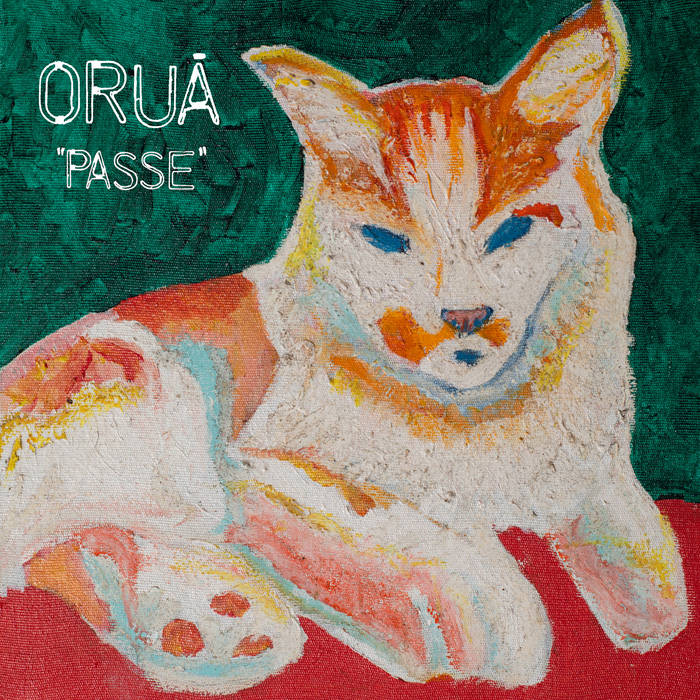
ORUA - Passe LP
Rio de Janeiro, where the mountains dramatically merge with the sea, is riddled with contradictions. It’s a cliche to say that a city is full of contradictions, but Rio de Janeiro is not just any city. Many elements are often in opposition: the beauty of the coastline contrasting the decay of the center city; the wealth of the valleys and coastline at odds with the poverty of the hillside favelas and the periferia (periphery); the idyllic sand and surf clashing with the harsh concrete and bricks of the streets. Rio’s beauty can often act like a mirage as there’s much in opposition - poverty, injustice, and violence - often just below the surface, bubbling. It’s from this city of contradiction that the band Oruã formed at the end of 2016. A band built not out of contradiction, but from improvisation, where inspired ideas often bubble up to the surface.
It’s often at the margins of Rio where creativity flows most freely. Lê Almeida says that violence fuels this work, in contrast to his gentle demeanor that seems like he wouldn't hurt a fly. Since he was young, Lê has had several experiences where violence - that he’s witnessed or been a victim of - has been used as a source of power and control, just as it has been in Rio for centuries. Oruã’s music can be seen as a reaction or resistance to this violence, particularly during a particularly turbulent time in Brasil’s history. Oruã works out of Escritório in the Centro neighborhood, in a "somewhat forgotten" area of Rio. The space is not far from Cemitério dos Pretos Novos, a mass grave where 30,000 bodies of slaves are buried. A gruesome memory, literally under the surface, of Brazil’s long and violent history of slavery.
It’s hard to identify anything traditionally “Brazilian” about Oruã’s sound, but the band comes from a centuries-long tradition of resistance. They come from Brazil’s indigenous people defying the seizure of their land. They come from a series of slave rebellions in Brazil, which continued until slavery was finally outlawed in 1888, the last country in the Americas to do so. They come from quilombos, communities around the country that were organized by fugitive slaves. They come from the traditions of Candomblé and Umbanda, syncretic religions of African origin with strong musical components that for centuries were often practiced in secret, practitioners claiming they were Catholic to avoid persecution. (The album title “Passe” is a practice in Umbanda in which people exchange energy; it also means to pass, where “passing” is a means to avoid detection). Oruã are descendants of this history of resistance. Their music is an exchange of energy with their audience, but also an attempt “to persuade them by hook or crook,” (as Nina Simone urged) to defy the oppressors. Oruã are encouraging their audience to rise up. Against racism. Against brutality. Against state-sponsored oppression. To refute violence; seeking to live free, with equality and fellowship.
By Jeff Caltabiano
Rio de Janeiro, where the mountains dramatically merge with the sea, is riddled with contradictions. It’s a cliche to say that a city is full of contradictions, but Rio de Janeiro is not just any city. Many elements are often in opposition: the beauty of the coastline contrasting the decay of the center city; the wealth of the valleys and coastline at odds with the poverty of the hillside favelas and the periferia (periphery); the idyllic sand and surf clashing with the harsh concrete and bricks of the streets. Rio’s beauty can often act like a mirage as there’s much in opposition - poverty, injustice, and violence - often just below the surface, bubbling. It’s from this city of contradiction that the band Oruã formed at the end of 2016. A band built not out of contradiction, but from improvisation, where inspired ideas often bubble up to the surface.
It’s often at the margins of Rio where creativity flows most freely. Lê Almeida says that violence fuels this work, in contrast to his gentle demeanor that seems like he wouldn't hurt a fly. Since he was young, Lê has had several experiences where violence - that he’s witnessed or been a victim of - has been used as a source of power and control, just as it has been in Rio for centuries. Oruã’s music can be seen as a reaction or resistance to this violence, particularly during a particularly turbulent time in Brasil’s history. Oruã works out of Escritório in the Centro neighborhood, in a "somewhat forgotten" area of Rio. The space is not far from Cemitério dos Pretos Novos, a mass grave where 30,000 bodies of slaves are buried. A gruesome memory, literally under the surface, of Brazil’s long and violent history of slavery.
It’s hard to identify anything traditionally “Brazilian” about Oruã’s sound, but the band comes from a centuries-long tradition of resistance. They come from Brazil’s indigenous people defying the seizure of their land. They come from a series of slave rebellions in Brazil, which continued until slavery was finally outlawed in 1888, the last country in the Americas to do so. They come from quilombos, communities around the country that were organized by fugitive slaves. They come from the traditions of Candomblé and Umbanda, syncretic religions of African origin with strong musical components that for centuries were often practiced in secret, practitioners claiming they were Catholic to avoid persecution. (The album title “Passe” is a practice in Umbanda in which people exchange energy; it also means to pass, where “passing” is a means to avoid detection). Oruã are descendants of this history of resistance. Their music is an exchange of energy with their audience, but also an attempt “to persuade them by hook or crook,” (as Nina Simone urged) to defy the oppressors. Oruã are encouraging their audience to rise up. Against racism. Against brutality. Against state-sponsored oppression. To refute violence; seeking to live free, with equality and fellowship.
By Jeff Caltabiano
Original: $49.78
-70%$49.78
$14.93Description
Rio de Janeiro, where the mountains dramatically merge with the sea, is riddled with contradictions. It’s a cliche to say that a city is full of contradictions, but Rio de Janeiro is not just any city. Many elements are often in opposition: the beauty of the coastline contrasting the decay of the center city; the wealth of the valleys and coastline at odds with the poverty of the hillside favelas and the periferia (periphery); the idyllic sand and surf clashing with the harsh concrete and bricks of the streets. Rio’s beauty can often act like a mirage as there’s much in opposition - poverty, injustice, and violence - often just below the surface, bubbling. It’s from this city of contradiction that the band Oruã formed at the end of 2016. A band built not out of contradiction, but from improvisation, where inspired ideas often bubble up to the surface.
It’s often at the margins of Rio where creativity flows most freely. Lê Almeida says that violence fuels this work, in contrast to his gentle demeanor that seems like he wouldn't hurt a fly. Since he was young, Lê has had several experiences where violence - that he’s witnessed or been a victim of - has been used as a source of power and control, just as it has been in Rio for centuries. Oruã’s music can be seen as a reaction or resistance to this violence, particularly during a particularly turbulent time in Brasil’s history. Oruã works out of Escritório in the Centro neighborhood, in a "somewhat forgotten" area of Rio. The space is not far from Cemitério dos Pretos Novos, a mass grave where 30,000 bodies of slaves are buried. A gruesome memory, literally under the surface, of Brazil’s long and violent history of slavery.
It’s hard to identify anything traditionally “Brazilian” about Oruã’s sound, but the band comes from a centuries-long tradition of resistance. They come from Brazil’s indigenous people defying the seizure of their land. They come from a series of slave rebellions in Brazil, which continued until slavery was finally outlawed in 1888, the last country in the Americas to do so. They come from quilombos, communities around the country that were organized by fugitive slaves. They come from the traditions of Candomblé and Umbanda, syncretic religions of African origin with strong musical components that for centuries were often practiced in secret, practitioners claiming they were Catholic to avoid persecution. (The album title “Passe” is a practice in Umbanda in which people exchange energy; it also means to pass, where “passing” is a means to avoid detection). Oruã are descendants of this history of resistance. Their music is an exchange of energy with their audience, but also an attempt “to persuade them by hook or crook,” (as Nina Simone urged) to defy the oppressors. Oruã are encouraging their audience to rise up. Against racism. Against brutality. Against state-sponsored oppression. To refute violence; seeking to live free, with equality and fellowship.
By Jeff Caltabiano