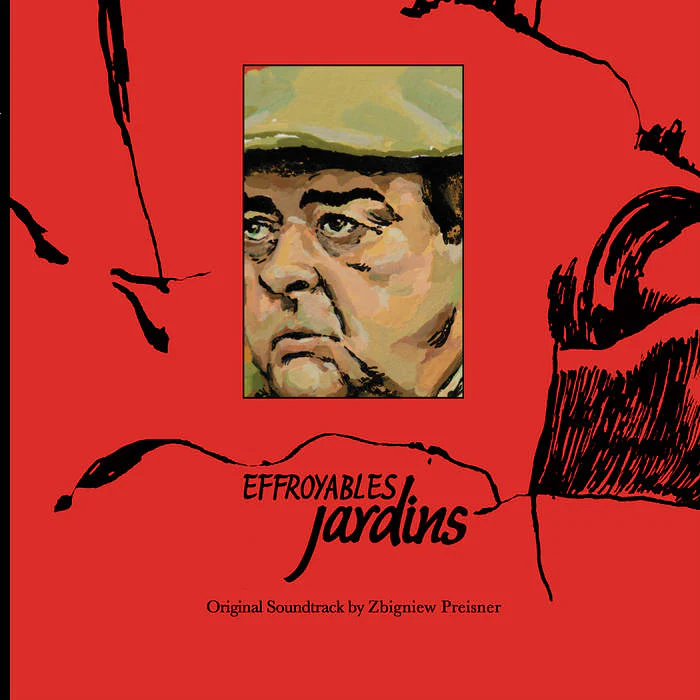
ZBIGNIEW PREISNER - Effroyables Jardins LP
A Colourful Storm presents Effroyables Jardins, a soundtrack composed by Zbigniew Preisner for Jean Becker’s eponymous film in December 2002. Given limited distribution at the time, the soundtrack’s lustre has only strengthened over the past two decades, and it can now be considered a forgotten gem of contemporary chamber composition. For us, it’s simply another understated triumph in Preisner's impeccable oeuvre.
Born in post-war Poland in the southern city of Bielsko-Biała, Preisner’s musical education was astonishingly autodidactic, his formal studies at the University of Kraków being history and philosophy. Early exposure to traditional and sacred Polish music, and discovering the works of Gorecki and Sibelius, left no small mark, the latter’s romantic melodicism an audible influence on his work. “Music was part of everyday life, so I didn’t study it,” he reflects. A chance encounter with then-burgeoning filmmaker Krzysztof Kieślowski in 1984 would be the start of one of the most significant collaborations of our time, beginning with No End (1984) and ending with an unbelievably inspired succession of works: Dekalog (1988-89), The Double Life of Véronique (1991) and the Three Colours trilogy (1993-94).
No film has left a more profound impact on us than Three Colours: Red and to contemplate our encounter of it - during an Air France flight in 2016, no less - is precisely the fatalistic premise that Kieslowski interrogates. Perhaps he felt similarly about meeting Preisner, their mutual faith immense (Kieslowski developed soundtracks with Preisner during screenwriting and offered him co-writing credits) and synergy palpable. “Krzysztof and Zbigniew really found each other, as they were deeply complementary in their need of emotional expression,” reflects Juliette Binoche upon her work in Blue. These films would be the last the duo worked on together, with Kieslowski announcing his retirement after the premiere of Red, before his untimely death two years later.
Effroyables Jardins symbolises Preisner’s post-Kieslowski era of solo composition, consciously shifting from devotional harmonies into a beautifully restrained style of neo-Romanticism. It marks his second soundtrack for Jean Becker, and follows Francis Ford Coppola’s commission for The Secret Garden (1993), the César-winning Élisa (1995), and Edoardo Ponte’s Between Strangers (2002), to highlight only a few. Its leitmotif - a delicate, sparse melody for piano and organ - appears only during the opening sequence and, like Preisner’s most powerful soundtracks, takes on a life of its own. Compositions for violin, harp and percussion are interspersed with haunting variations on a theme and a masterful use of silence.
Devotees of Preisner and Kieslowski will recognise the duo’s most exquisite deployment of the leitmotif, first as a lover’s lament in No End, then reappearing to haunt the grieving Julie, nine years later, in Blue. Julie, who loses her husband - a world-renowned composer - and young daughter in a car crash, is tormented by her husband’s unfinished magnum opus. His music, composed in actuality by Preisner, is a metaphysical presence that symbolises Preisner’s romantic yet fatalistic worldview. In Red, his notes invoke Valentine's music store epiphany and, in our everyday lives, the sublimity of moments often unnoticed.
A Colourful Storm presents Effroyables Jardins, a soundtrack composed by Zbigniew Preisner for Jean Becker’s eponymous film in December 2002. Given limited distribution at the time, the soundtrack’s lustre has only strengthened over the past two decades, and it can now be considered a forgotten gem of contemporary chamber composition. For us, it’s simply another understated triumph in Preisner's impeccable oeuvre.
Born in post-war Poland in the southern city of Bielsko-Biała, Preisner’s musical education was astonishingly autodidactic, his formal studies at the University of Kraków being history and philosophy. Early exposure to traditional and sacred Polish music, and discovering the works of Gorecki and Sibelius, left no small mark, the latter’s romantic melodicism an audible influence on his work. “Music was part of everyday life, so I didn’t study it,” he reflects. A chance encounter with then-burgeoning filmmaker Krzysztof Kieślowski in 1984 would be the start of one of the most significant collaborations of our time, beginning with No End (1984) and ending with an unbelievably inspired succession of works: Dekalog (1988-89), The Double Life of Véronique (1991) and the Three Colours trilogy (1993-94).
No film has left a more profound impact on us than Three Colours: Red and to contemplate our encounter of it - during an Air France flight in 2016, no less - is precisely the fatalistic premise that Kieslowski interrogates. Perhaps he felt similarly about meeting Preisner, their mutual faith immense (Kieslowski developed soundtracks with Preisner during screenwriting and offered him co-writing credits) and synergy palpable. “Krzysztof and Zbigniew really found each other, as they were deeply complementary in their need of emotional expression,” reflects Juliette Binoche upon her work in Blue. These films would be the last the duo worked on together, with Kieslowski announcing his retirement after the premiere of Red, before his untimely death two years later.
Effroyables Jardins symbolises Preisner’s post-Kieslowski era of solo composition, consciously shifting from devotional harmonies into a beautifully restrained style of neo-Romanticism. It marks his second soundtrack for Jean Becker, and follows Francis Ford Coppola’s commission for The Secret Garden (1993), the César-winning Élisa (1995), and Edoardo Ponte’s Between Strangers (2002), to highlight only a few. Its leitmotif - a delicate, sparse melody for piano and organ - appears only during the opening sequence and, like Preisner’s most powerful soundtracks, takes on a life of its own. Compositions for violin, harp and percussion are interspersed with haunting variations on a theme and a masterful use of silence.
Devotees of Preisner and Kieslowski will recognise the duo’s most exquisite deployment of the leitmotif, first as a lover’s lament in No End, then reappearing to haunt the grieving Julie, nine years later, in Blue. Julie, who loses her husband - a world-renowned composer - and young daughter in a car crash, is tormented by her husband’s unfinished magnum opus. His music, composed in actuality by Preisner, is a metaphysical presence that symbolises Preisner’s romantic yet fatalistic worldview. In Red, his notes invoke Valentine's music store epiphany and, in our everyday lives, the sublimity of moments often unnoticed.
Description
A Colourful Storm presents Effroyables Jardins, a soundtrack composed by Zbigniew Preisner for Jean Becker’s eponymous film in December 2002. Given limited distribution at the time, the soundtrack’s lustre has only strengthened over the past two decades, and it can now be considered a forgotten gem of contemporary chamber composition. For us, it’s simply another understated triumph in Preisner's impeccable oeuvre.
Born in post-war Poland in the southern city of Bielsko-Biała, Preisner’s musical education was astonishingly autodidactic, his formal studies at the University of Kraków being history and philosophy. Early exposure to traditional and sacred Polish music, and discovering the works of Gorecki and Sibelius, left no small mark, the latter’s romantic melodicism an audible influence on his work. “Music was part of everyday life, so I didn’t study it,” he reflects. A chance encounter with then-burgeoning filmmaker Krzysztof Kieślowski in 1984 would be the start of one of the most significant collaborations of our time, beginning with No End (1984) and ending with an unbelievably inspired succession of works: Dekalog (1988-89), The Double Life of Véronique (1991) and the Three Colours trilogy (1993-94).
No film has left a more profound impact on us than Three Colours: Red and to contemplate our encounter of it - during an Air France flight in 2016, no less - is precisely the fatalistic premise that Kieslowski interrogates. Perhaps he felt similarly about meeting Preisner, their mutual faith immense (Kieslowski developed soundtracks with Preisner during screenwriting and offered him co-writing credits) and synergy palpable. “Krzysztof and Zbigniew really found each other, as they were deeply complementary in their need of emotional expression,” reflects Juliette Binoche upon her work in Blue. These films would be the last the duo worked on together, with Kieslowski announcing his retirement after the premiere of Red, before his untimely death two years later.
Effroyables Jardins symbolises Preisner’s post-Kieslowski era of solo composition, consciously shifting from devotional harmonies into a beautifully restrained style of neo-Romanticism. It marks his second soundtrack for Jean Becker, and follows Francis Ford Coppola’s commission for The Secret Garden (1993), the César-winning Élisa (1995), and Edoardo Ponte’s Between Strangers (2002), to highlight only a few. Its leitmotif - a delicate, sparse melody for piano and organ - appears only during the opening sequence and, like Preisner’s most powerful soundtracks, takes on a life of its own. Compositions for violin, harp and percussion are interspersed with haunting variations on a theme and a masterful use of silence.
Devotees of Preisner and Kieslowski will recognise the duo’s most exquisite deployment of the leitmotif, first as a lover’s lament in No End, then reappearing to haunt the grieving Julie, nine years later, in Blue. Julie, who loses her husband - a world-renowned composer - and young daughter in a car crash, is tormented by her husband’s unfinished magnum opus. His music, composed in actuality by Preisner, is a metaphysical presence that symbolises Preisner’s romantic yet fatalistic worldview. In Red, his notes invoke Valentine's music store epiphany and, in our everyday lives, the sublimity of moments often unnoticed.